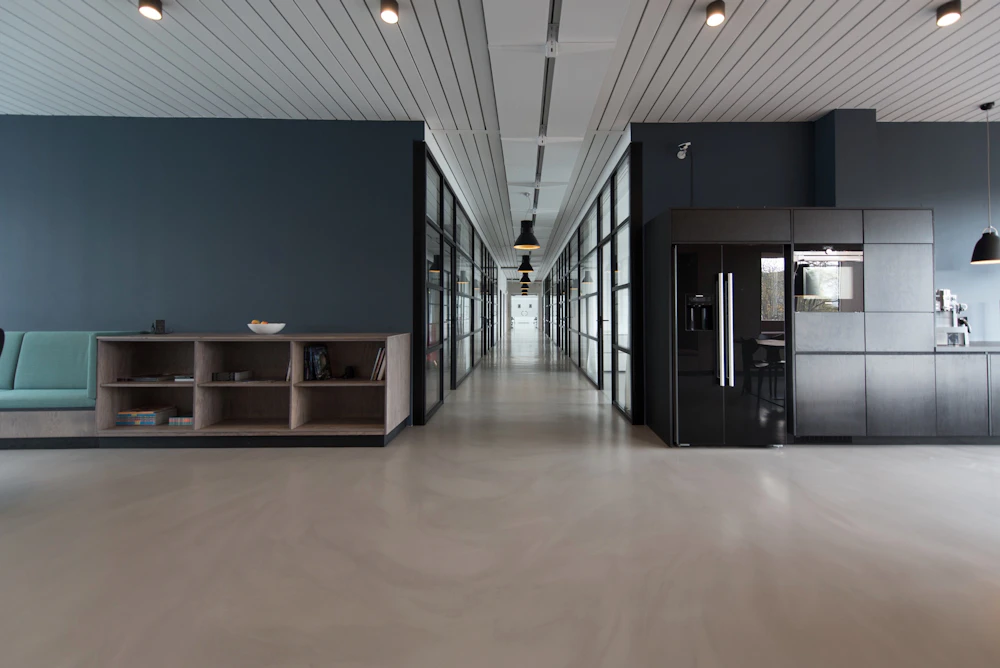
For small business owners, office cleaning is often treated as an afterthought — something that gets addressed when it becomes visibly necessary rather than as a structured part of running the space. This guide is intended to offer a more practical framework: what cleaning a professional workspace actually involves, how frequently different areas should be addressed, and how to structure a sustainable routine whether you handle it internally or work with a service provider.
The information below is applicable to offices, boutiques, studios, co-working spaces, and similar commercial environments up to roughly 3,000 square feet. Larger or more specialized spaces (medical, food service, industrial) have different standards and regulatory requirements not covered here.
Why Cleaning Standards Matter in a Small Office
There are a few practical reasons why maintaining a clean workspace is worth taking seriously, beyond the obvious aesthetic benefits.
Staff experience
The condition of a workspace affects how people feel working in it. A desk environment that is visibly dusty, a kitchen area that has accumulated residue, or a washroom that isn't maintained to a basic standard creates friction in the workday — even if staff don't explicitly mention it. People generally function better in spaces that are organized and clean.
Client and visitor impressions
For businesses where clients, partners, or visitors come to the office, the physical state of the space communicates something about how the business is run. A meeting room with visible dust on surfaces or a reception area with an overflowing bin creates an impression that persists regardless of how well the meeting itself goes.
Maintenance of physical assets
Regular cleaning extends the life of office furniture, carpeting, hard flooring, and equipment surfaces. Dust and grime accumulation in vents, keyboards, and on equipment also has a functional effect over time — and is significantly easier to prevent through routine maintenance than to address after the fact.
Area-by-Area Cleaning Standards
Workstations and desk areas
Workstation cleaning typically includes wiping down desk surfaces and monitor screens, removing visible dust from accessible surfaces, clearing small debris from keyboards and desk organizers, and emptying individual waste bins. The frequency depends on how many people share a space and how the workday is structured. For most small offices, weekly desk surface cleaning is a reasonable standard.
Personal items, stacked papers, and desk accessories are generally not moved by a cleaning service — the scope is limited to accessible and clearly defined areas. This is worth clarifying during setup with any provider you work with.
Common areas and reception
High-traffic areas — entrance halls, reception desks, waiting areas, and kitchen or break room spaces — accumulate visible wear more quickly than individual workstations. These areas typically warrant more frequent attention, and are often the most important from a visitor-impression standpoint.
In a reception area, this means: clean floors, dust-free surfaces, an organized appearance, and no accumulated waste. In a kitchen or break room, this means: wiped counters and appliance exteriors, clean sink, emptied bins, and mopped floor. Both areas should be addressed at every cleaning visit.
Washrooms
Office washrooms should be cleaned at every visit regardless of cleaning frequency. The standard includes toilet cleaning and disinfection, sink and mirror cleaning, floor sweeping and mopping, and restocking of paper products where applicable. For offices with regular foot traffic, once per week is the minimum reasonable standard. Higher-traffic spaces warrant more frequent attention.
Washrooms have the highest impact on a visitor's overall impression of a building's cleanliness. They are worth prioritizing even when budget or time is constrained.
Floors
Floor cleaning frequency varies by material and traffic. In a small office environment:
- Hard floors (tile, hardwood, LVP) in high-traffic areas should be swept and mopped at every visit
- Carpeted areas should be vacuumed at every visit, with periodic deeper cleaning (steam or extraction) every six to twelve months depending on use
- Entry mats should be shaken out and vacuumed regularly — they accumulate tracked-in debris faster than other flooring areas
Windows and glass surfaces
Interior window cleaning is typically handled on a monthly or quarterly basis rather than at every visit. Fingerprint marks on glass partitions, door glass, and storefronts are worth addressing more frequently, particularly in client-facing spaces.
Setting Up a Cleaning Schedule
For most small offices in the 500–2,000 square foot range with four to twelve staff members, a weekly professional cleaning visit covers the necessary baseline. Offices with higher foot traffic, shared amenities, or client-facing spaces may benefit from more frequent attention to washrooms and common areas.
A practical schedule might look like this:
Every visit (weekly)
- Washrooms fully cleaned and disinfected
- Kitchen/break room surfaces wiped, sink cleaned, bins emptied
- Reception area surfaces dusted and tidied
- All floors swept/vacuumed and mopped
- Trash bins emptied throughout the space
- High-contact surfaces wiped (light switches, door handles, shared equipment exteriors)
Monthly
- Workstation surface dusting (monitors, shelving, accessible equipment)
- Interior windows and glass partitions cleaned
- Baseboards wiped
- Kitchen appliance interiors checked and cleaned as needed
Quarterly or as needed
- Carpet extraction or hard floor deep clean
- Air vent dusting
- Light fixture cleaning
- Behind/under furniture where accessible
Managing the Transition to a Cleaning Service
If your office has been self-cleaned or not professionally maintained for some time, expect that the first professional visit will require more time than subsequent ones. There is often accumulated buildup in washrooms, kitchens, and high-touch surfaces that takes a one-time intensive clean to address before a regular maintenance schedule becomes effective.
When setting up a cleaning service for a commercial space, it is worth providing the provider with a clear brief: the space layout, what areas are included and excluded, any equipment or surfaces that require special handling, access arrangements, and preferred timing. The more specific you are upfront, the less likely there are to be misunderstandings later.
Building in Staff Responsibility
Professional cleaning is not a substitute for basic day-to-day staff responsibility in a shared space. A cleaning service that visits once per week cannot compensate for a workplace culture where dishes are left in the sink for days, trash is not emptied when full, or spills are left unaddressed.
A reasonable expectation in a small office is that staff maintain basic tidiness in their own work area and in shared spaces between professional visits. This does not require formal policies — a brief conversation about expectations when onboarding new staff is usually sufficient.
What to Look for in a Commercial Cleaning Provider
If you are evaluating commercial cleaning providers, a few practical things to look for:
- Clear scope of service: The provider should be able to tell you exactly what is included in a visit and what is not, without vague language about "thorough cleaning."
- Consistent team: The same people coming to your space regularly tend to produce better and more consistent results than rotating teams who don't know the layout or your preferences.
- Transparent pricing: Pricing should be confirmed before work begins and should not change without discussion.
- Insurance: Any commercial cleaning provider working in your space should carry appropriate liability coverage.
- Communication: A provider that communicates proactively about scheduling, issues, and questions is significantly easier to work with than one you have to chase.
If you are looking for commercial cleaning services in the Montreal area and want to discuss what a structured plan for your space would look like, get in touch with Dexlivo. We're happy to walk through the scope and confirm whether we're a fit before anything is committed.